Roots of a green agenda
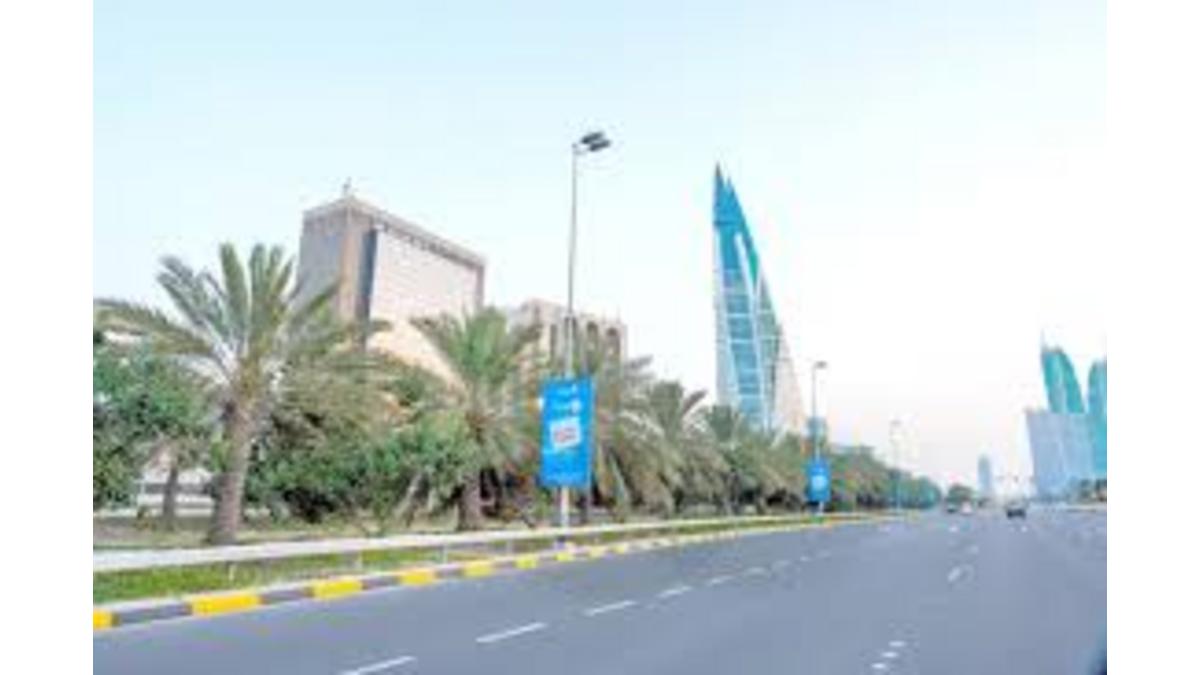
The choice of suitable roadside plants, trees and flowers will likely be analysed annually to take into account the latest scientific breakthroughs and botanic expertise as plans to beautify, add shade and hit the kingdom’s environmental targets continue.
Capital Trustees Board services and public utilities committee chairwoman Huda Sultan is proposing that Municipalities Affairs and Agriculture Ministry officials and municipal councillors and board members brainstorm and keep on top of the green agenda, also taking into account maintenance and public safety issues.
“This means no dangerous fruits and potentially slippery flowers, twigs, bark or branches able to drop on the pavement or street below,” said Ms Sultan.
“Root systems should also be safe, not highly invasive and not prone to suckering,” she added.
“The ideal street tree, from a maintenance point of view, is one that has a tall, straight trunk that spreads its branches above head height.
“From an aesthetic point of view, trees need to create an appealing street view in an urban environment, which is accentuated by uniform growth and size. The choice of a named variety, rather than a species, usually delivers this need for uniformity.”
Ms Sultan believes the perfect choices should also provide shade for both pedestrians and parked cars, and offer interest to the street scene for example from their flowers, leaves or bark.
“When assessment is made of trees for their potential use in street plantings the number of truly suitable species and varieties drops considerably when all criteria is met,” she added. “We’re on the hunt for tree varieties that will deliver as street trees looking at both traditional and non-traditional choices.
“Improved forms of traditional trees can allow historic plantings to be replanted to recreate a landscape that is in keeping with the heritage of a particular street. For example, the hybrid, resistant poplar ‘Veronese’ may have a role in replacing aged and diseased poplars in commemorative avenue plantings.”
Ms Sultan believes it is important to adjust the criteria each year to take into account climate change, best practice and scientific advances.
“Nothing should be set in stone,” she said. “To meet current specifications for trees, which is currently under review, plants grown for street trees should have a clear trunk to at least 1.8m, produce little or no fruit, have strong branches and good tolerance to climate extremes and soil variation.
“These tree selections should be also well suited for use to line avenues or walkways in parks and gardens or to choose for driveways in domestic landscapes.
“These trees grow with a strong single trunk and, once established, are tolerant of a wide range of soil and climatic conditions including drought.”
She pointed out that trees such as poplars, elms and plane trees, or jacarandas and poincianas, that were favoured by town planners of yesteryear, no longer fitted the bill.
“Plants perform numerous aesthetic, spatial and climatic functions,” added Ms Sultan. “The visual principles of colour, texture, scale and rhythm can be used to create an aesthetically pleasing environment.
“They can serve to unify other design elements, provide neutral backgrounds for focal points, relate a structure to its surrounding site and reduce the ‘hardness’ of the adjacent or surrounding architecture.”
She pointed out that plants can also help influence the microclimate of an outdoor space. “Screening is another function plants can perform,” she added.
“They can act as space defining elements in the landscape, and can serve the same functions that many ‘hard’ building materials serve: to form outdoor walls, fences and canopies that define spaces or circulation routes.
“They also can attract birds, butterflies and other forms of wildlife. Conspicuous fruits, both fleshy and dry, attract birds and showy, nectar-bearing flowers may attract birds and butterflies.
“Plants also serve as an element of environmental stabilisation. They can stabilise eroded slopes and revitalise damaged soils.”
Source: https://www.gdnonline.com/Details/1314716/Roots-of-a-green-agenda